Major Properties and Features of Titanium 6242
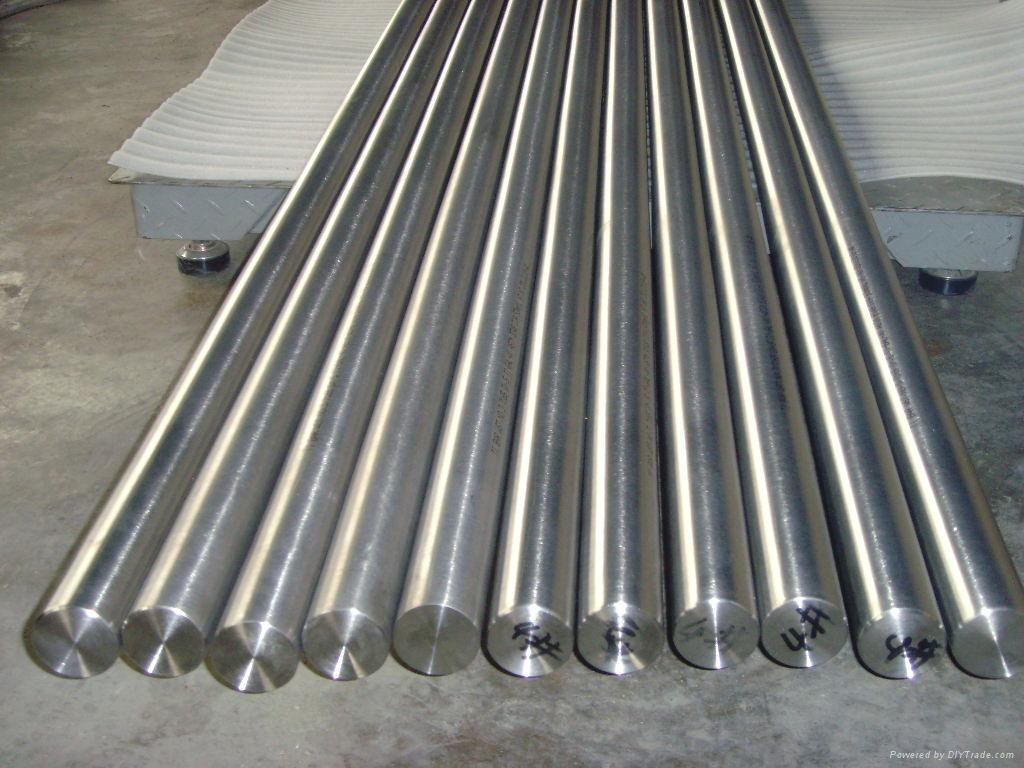
Titanium 6242, also known as Ti-6Al-2Sn-4Zr-2Mo or Ti-6242, is a high-performance titanium alloy designed for demanding applications where strength, low weight, and resistance to high temperatures matter. It is especially important in aerospace because many aircraft and engine components must perform reliably under heat, stress, vibration, and repeated loading.
So, what makes Titanium 6242 different from standard titanium grades? Its carefully balanced chemical composition and near-alpha structure give it a useful combination of mechanical strength, creep resistance, toughness, and high-temperature stability.
What Is Titanium 6242?
Titanium 6242 is made primarily from titanium, with approximately 6% aluminum, 2% tin, 4% zirconium, and 2% molybdenum. A small amount of silicon is also controlled in the alloy, while titanium makes up the balance of the composition.
Each alloying element contributes to the material's performance. Aluminum helps increase strength and stability, while tin supports strength at elevated temperatures. Zirconium contributes to strength and high-temperature performance, and molybdenum helps control the alloy's phase structure. Silicon is present in a small amount and can improve creep resistance.
High Strength-to-Weight Ratio
One of the biggest advantages of Titanium 6242 is its combination of strength and relatively low density. The alloy has a density of about 4.54 g/cm³, making it much lighter than many conventional engineering metals. Its elastic modulus is approximately 114 GPa.
This strength-to-weight advantage is especially valuable in aircraft and jet engines. Reducing component weight can help improve overall aircraft efficiency without sacrificing the strength needed for demanding service conditions.
Depending on product form and heat treatment, Titanium 6242 can achieve high tensile and yield strengths. For example, heat-treated rod can achieve room-temperature yield strengths of approximately 895–955 MPa and ultimate tensile strengths of around 1,004–1,045 MPa.
Excellent High-Temperature Performance
Titanium 6242 is particularly valued for applications where temperatures are higher than those normally handled by general-purpose titanium alloys. The alloy is suitable for long-term applications at temperatures of approximately 538°C (1,000°F).
Its ability to retain useful strength at elevated temperatures makes it suitable for parts exposed to hot engine environments. As with other metals, its strength decreases as temperature increases, but its high-temperature performance remains one of its key advantages.
Strong Creep Resistance
Creep is the slow and permanent deformation that can occur when a metal remains under stress at high temperature for a long period. For aircraft engine components, controlling creep is important because parts may operate under continuous loads and heat.
Titanium 6242 was developed with elevated-temperature performance in mind, and its composition helps provide good creep strength. This makes it useful for components that must maintain dimensional stability during extended service.
Good Toughness and Fatigue Performance
Strength alone is not enough for aerospace materials. Components also need to tolerate repeated loading and resist damage. Titanium 6242 offers a useful balance of tensile strength, toughness, and fatigue-related performance.
Its properties can vary depending on the manufacturing process, product form, and heat treatment. For this reason, manufacturers select the appropriate material condition based on the requirements of the specific application.
The alloy is also nonmagnetic and has a relatively low coefficient of thermal expansion, approximately 7.7 × 10⁻⁶ mm/mm/°C. Its thermal conductivity is about 6.92 W/m·K at room temperature.
Where Is Titanium 6242 Used?
Aerospace is the main field for Titanium 6242. Typical applications include gas turbine compressor blades, discs, and impellers. In sheet form, it can also be used for engine afterburner structures and hot airframe skin applications.
The alloy is available in several product forms, including sheet, plate, bar, and forgings. Its use in aerospace structures reflects titanium's broader advantages, including low weight, corrosion resistance, and good compatibility with carbon-fiber composite structures.
Processing and Heat Treatment
Titanium 6242 can be forged and machined, with processing practices similar in many ways to those used for Ti-6Al-4V. Heat treatment is important because it can significantly influence the final microstructure and mechanical properties.
Typical treatments include annealing, solution treatment, and aging. Forging temperatures are generally around 954–1,066°C, while solution treatment is performed below the beta-transus temperature, which is approximately 995°C.
Final Thoughts
Titanium 6242 stands out as a specialized titanium alloy that combines low weight, high strength, elevated-temperature capability, creep resistance, and toughness. These characteristics explain why it remains an important material for demanding aerospace components.
For businesses looking for reliable titanium and other specialty materials, FlightMetals is a specialty metals supplier worth considering.
